

What is Keyword and Topic Research?
When a user searches on the internet – either on search engines like Google, with AI chatbots, or through voice assistants – they use words and phrases relevant to their query. These words and phrases are called keywords (regardless of whether they’re one word or more).
A keyword (or multiple keywords) helps the user move towards solving a problem. They could be researching how to do a task, looking for an item to buy, or learning more on a certain subject.
Keyword research is the process of identifying what your target audience is searching for.
A topic is a group of these keywords that are all related.
The purpose of it all together is to understand your user needs and wants, and so develop content on your website or social sites to attract the right customers. This content either provides them with relevant information or directs them to a product or service that they’re interested in.
AI in Keyword and Topic Research
AI chatbots such as ChatGPT, Gemini and Claude can be used to make keyword research quicker and more effective.
Traditionally, keyword research involves a lot of time manually scrolling through hundreds and thousands of phrases to pick out those that are relevant and worthwhile based on search volume, intent, relevance, and competition. AI can automate this process as well as bring more advantages to your keyword research.
However, it’s worth noting that AI on its own is not an overly effective research tool. It cannot give you important information such as search volume (how many times a keyword has been searched) or real-time insights. Use it instead as part of a toolbox alongside tools such as Keyword Planner, Google Search Console and SEMRush.
6 Ways AI Can Help With Keyword and Topic Research
If you’re completely new to keyword research, I recommend first reading my guide on how to do keyword research for free. This will help you better understand keyword research, why it’s important, and how to do it yourself. Because AI alone is not enough for effective keyword research, the guide will also help you make a start before using AI to supercharge the results.
When you’re done, come back here and let’s look at how AI can help your keyword and topic research.
Filter Relevant Keywords
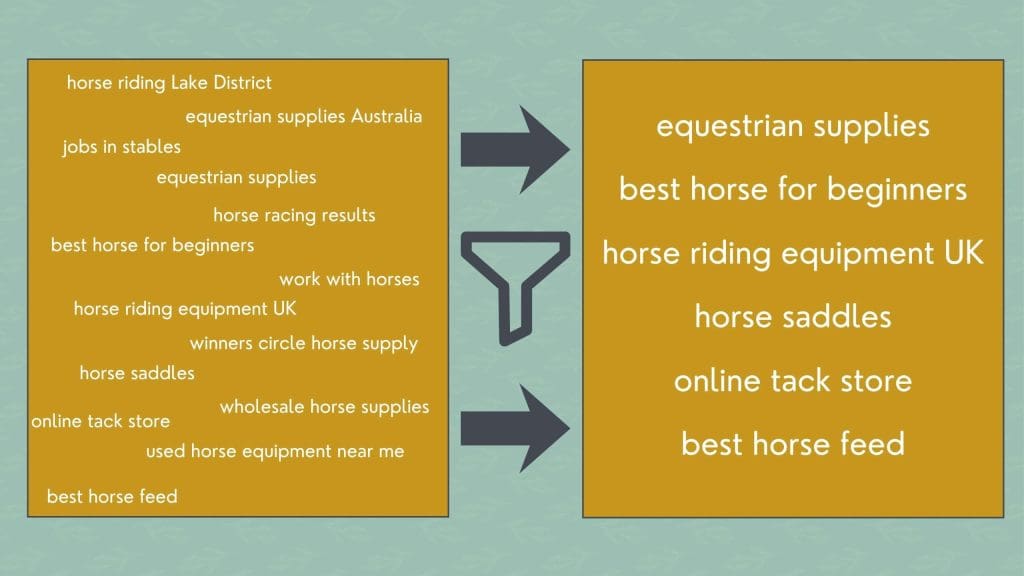
Because of some limitations with AI, the first steps of your keyword research should follow traditional methods. That will involve using tools such as SEMRush and Google’s Keyword Planner to generate a list of keywords linked to your business, topic, or niche.
However, instead of then manually sorting through and filtering all these keywords to find those that are most relevant, you can feed the full list into your preferred chatbot and ask it to do the leg work.
Enter your list of keywords and briefly describe what you want to keep and get rid of. For example, you might ask AI to remove from the list all those keywords that specifically mention your competitors or those looking for services/products in countries outside of the UK. These are all likely irrelevant to your needs, and AI can remove them in one fell sweep.
Remember that AI is not a mind-reader. You will still need to provide clear instructions about what you do and do not want in order to get the best results.
Remove Close Duplicates and Misspellings
The initial stages of unfiltered keyword research means you end up with a lot of close-duplicate keywords, or keywords that are the same but with misspelled words. Enter your unfiltered list in a chatbot and ask it to analyse and remove all close duplicates and misspellings. You’ll find your list greatly reduced!
For even better results, you may want to also input the search volume for each keyword. When asking AI to remove close-duplicates, you can additionally request that it retains the highest-volume keywords.
Group Keywords by Intent
There are four main types of search intent, which is what a user wants to achieve when they undertake a search:
- Informational: the user wants to know something about a topic
- Navigational: the user is looking for a specific website
- Commercial: the user is researching options to buy a product/service
- Transactional: the user is ready to buy a product/service
The intent behind a keyword will influence the kind of content the user wants to see. Understanding intent will help you provide the right kind of information that will bring customers to your site. From there, you can nurture a potential customer until they’re ready to make a purchase.
When you’ve conducted initial keyword research and filtered the results, you can ask AI to group the keywords by intent. This will give you a breakdown of keywords that you can use for different types of content.
Quickly Create Keyword Clusters and Topics
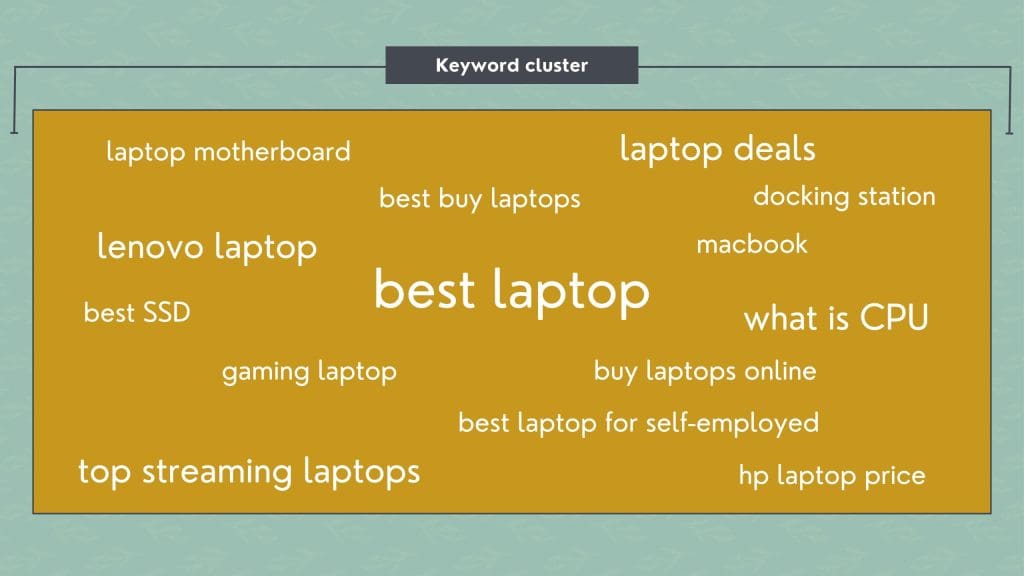
AI can also help group by clusters and topics. These are collections of related keywords based around a certain theme. You can ask AI to identify those themes for you based on the keywords you input, or you can ask it to create specific clusters and topics. For example, the following prompt might work if you sell make-up:
Identify all keywords from the below list that are relevant to applying make-up. Group them in clusters based on the type of make-up, e.g. lipstick or concealer.
Filter For Long-Tail Keywords
Long-tail keywords are more specific queries that are often made up more than just a couple of words. They can be overlooked because search volume is often much lower, but they can also be valuable because intent is more specific. That means those searching long-tail keywords are closer to buying. By using AI to pick out long-tail keywords, you can develop more specifically targeted content that target these high-intent purchasers.
Implement Keywords into Content Outlines
Once you’ve used AI to filter your keyword lists and create topics, you can start using it for content development.
Rather than using them to create your entire website or page copy, chatbots are best used for content outlines that you, the human, can then expand on. As you already have the relevant keywords, you can now input these and ask AI to create content outlines based on the keywords, topics and clusters it has previously identified.
Think beyond written website copy, too. You can, for example, also use it to create scripts for videos or social posts.
Conclusion
AI is an extra tool for your SEO toolbox that can help reduce the time you spend on keyword research while still getting effective results. Because chatbots don’t generally have access to data such as search volume and real-time information, AI is best used in combination with other tools (paid or free) such as SEMRush and Google’s Keyword Planner. Use AI to group keywords in clusters, develop keyword-rich content, and quickly eliminate irrelevant phrases.