

Festive Keyword Research
Keyword research can help you understand what your customers and potential customers are looking for. Use tools like Google Search Console to find festive-related searches, check your site searches from last Christmas, and have a peek at Google Trends to find out when festive interest is starting to increase.
Using this research, you can start developing and updating content on your website to help customers when Christmas is on their mind.
Create a Dedicated Christmas and New Year Page
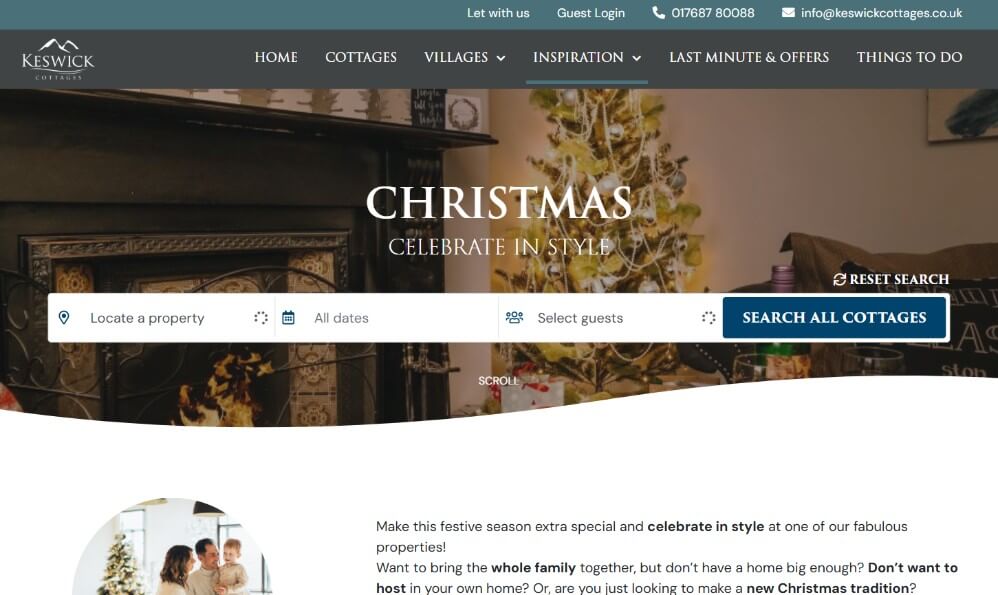
Creating a page on your site that specifically addresses Christmas and New Year is a good way to direct traffic to all your seasonal content. A hotel, for example, might create a page that shows Christmas events, rooms that are available over the festive season, and useful information about adjusted opening times.
When creating a Christmas and New Year page, use a URL that is evergreen – that means something like www.yourwebsite.com/christmas-new-year. Avoid including dates in the URL, and don’t delete this page after the season has passed. Instead, update it as soon as possible in preparation for the following year.
Publish Special Events
Plan your events for Christmas and get them on your website by no later than September. December is a busy time, so people like to book in advance. Remember to share your events across platforms, including on your Google Business Profile and social pages.
If you hold a similar event each year, you can follow a similar format to your dedicated Christmas and New Year page, described above. Make the URL evergreen so that it can be used year after year, and avoid deleting the page once the event has passed.
When publishing event(s), make sure you include all relevant information including dates, times, how to book, and anything else useful such as menus or dress code.
Prepare Product Categories
Product categories on an e-commerce store help customers more easily find what they’re looking for. By carefully planning your festive categories, you can help target searchers and promote your products to them.
How many categories you include will be determined by the size of your shop – a small store with a handful of products doesn’t need dozens of categories. On the other hand, larger stores may want to create both categories and subcategories.
Popular product categories for Christmas include Christmas Gifts, Children’s Christmas Gifts, Gifts for Him, Gifts for Her and Gifts for Teenagers. Or, if your products expand beyond gifting, think of categories such as dresses for Christmas parties, Christmas decorations and Christmas day essentials.
Add descriptions to the category pages to help both people and search engines understand what they can find on that page. Get started by reading my guide to writing SEO-friendly website copy.
Start Writing Blogs and Guides
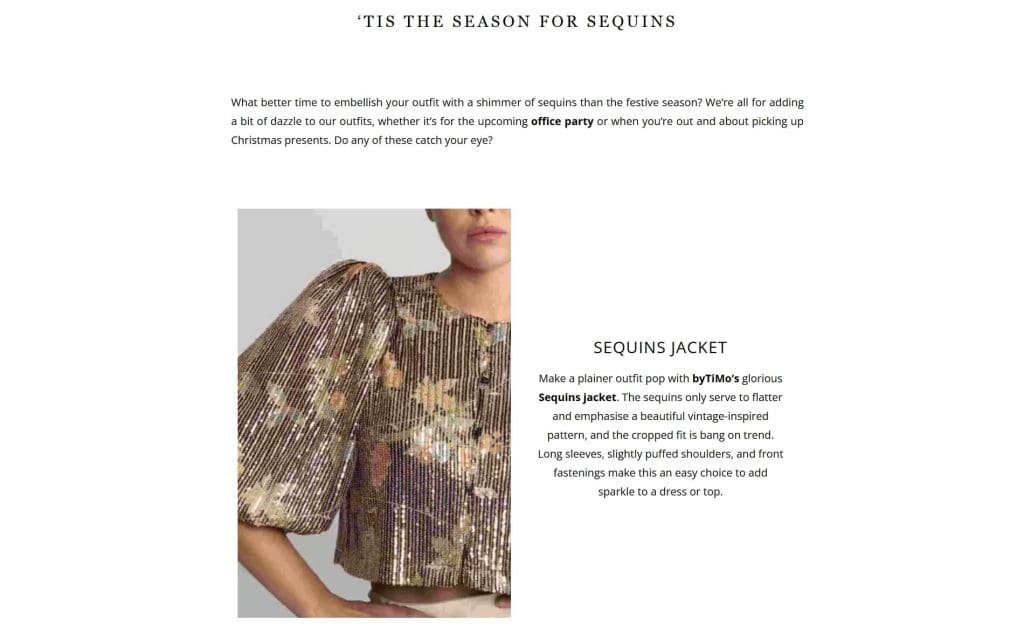
Blogs can really help boost website traffic and sales over the festive period. Think about guides to Christmas etiquette, gift guides, party outfit edits, or festive wedding ideas.
But Christmas is already a very busy time for many businesses, so trying to manage all the additional orders whilst also writing and publishing relevant blogs is not always feasible. Instead, find a quieter period during the year and consider bulk-writing your guides in preparation.
If writing blogs, remember to include links to the relevant services and products you have available on your site, and use a festive-themed category to group all related posts.
Optimise for Black Friday
Black Friday is generally seen as the true start of the Christmas buying season. If you participate, remember to have your sale prices ready, as well as product categories prepared that speak specifically to this huge sale period. A dedicated Black Friday Sales page will help boost your search presence and draw customers in.
Clarify Last-Order Days and Returns Policies
Last-order dates are important at Christmas because people need to know when they can still get what they need in time. Make sure this information is stated very clearly on your website, perhaps with a pop-up banner. You can also share the information across your socials, Google Business Profile, and newsletter.
Similarly, returns policies are important at Christmas because customers want to know that they can return gifts if they don’t fit or aren’t quite right. Make this easy to find on your website and explain your policy clearly. Tell people how they can return items, when returns are accepted, any time restrictions, and condition requirements. Not only is this good for your customer service and festive SEO, it helps protect your business.
Consider Last-Minute Buyers
A lot of people are unorganised or too busy at Christmas to do things until the last-minute, so you can help them by creating a dedicated category for last-minute options, whether that’s gifts, breaks, or essentials. Make sure you fill the page with items that are available and in stock and ensure it ties in with your last order dates (see below) so that people know they can still receive things in time for the big day.
Don’t Forget Post-Festivities
Once the rush of the festive season is over, you might want to put it all behind you until next year. But before you do, some website housekeeping is in order to ensure everything is up-to-date.
Run through your website and update any Christmas and New Year pages. You might want to hide festive-specific products until next year, update pages that reference this year’s Christmas events, and remove any festive promotional banners or menu links on your site. This tidy-up of your website will help keep your site clean, relevant, and open for the next calendar year – all positive things from an SEO (and user experience) perspective.
Conclusion
Festive buying behaviour starts properly in September but, as SEO work can take some time to have an effect, it’s worth starting to think and implement website changes as early as summer. Plan festive product categories, blogs, and other content, ensure a robust returns policy, clarify last-order dates, and make sure everything is easy to find.