

Understanding Local Search
What is Local Search?
Local search is pretty much what it says on the box: a user searches for a service or a product in a local area. It could be someone looking to buy hiking boots in Keswick, or for things to do in Windermere. It could be a search like “wedding florist near me” or “plumber in my area”.
It’s important to note that local searches aren’t just for people currently in the local area. In the Lake District, especially, there is a large hospitality industry, so local searches could involve people looking, for example, for accommodation in the Lake District, even while they’re living elsewhere. Local searches can be from people local to an area, currently in an area, or planning to visit an area.
Also keep in mind that search keywords don’t need to include a specific location or even a “near me” tag for a local search to be triggered. Search engines will also look at contextual clues such as location of the IP address, type of search, and the user’s search history.
Proximity, Relevance, and Prominence
There are three broad pillars that affect whether or not your website shows up in a local search:
Proximity to the location that a searcher is either in, or searching around.
Relevance to the specific query. How well does your site match with the searcher’s question?
Prominence of the business. This is based on a number of factors such as reputation and trust signals like reviews, articles and backlinks.
Google – and other search engines – have ways of calculating how you score in the above criteria and how your competitors score. How well each business scores will affect whether your website shows up in search and where it shows.

How To Improve Local Search Performance
Location Targeting In Website Copy
Developing effective content can help improve your chances in local search. The key is to demonstrate your location and your service area without using black hat SEO techniques that could see your site penalised and your traffic plummet.
Black Hat SEO techniques include:
- Adding a long list of local towns, cities, villages and areas to your website.
- Creating an identical page for each area, and just changing the location name.
- Keyword stuffing – repeatedly adding phrases such as “wedding flowers in Keswick”, “wedding flowers in Windermere”, “wedding flowers in the Lake District” into copy where they don’t make grammatical sense and/or interrupt the flow of the text.
Search engines and AI chatbots are very smart now. If they know you have a business in Keswick, they already know that Thornthwaite, Applethwaite and Portinscale are nearby.
Instead, make sure you find a few key places in your website copy where you can mention your primary locations without overdoing it. For example, your main homepage title could be “Luxury Hotel in Grasmere”, and your main body text could include something like “based in the pretty Lake District village of Grasmere”.
It’s okay to list your service areas, too, just make sure you list a few key areas rather than dozens of minor villages and regions.
If it’s relevant to your business, consider writing a blog that includes plenty of mentions of the local areas. For Lake District accommodation, you might write guides of things to do in the local area, mentioning key villages and locations nearby, as well as your own. Or wedding businesses could write guides to the best photography locations or the best local wedding venues.
Make sure your address (or addresses if you have multiple locations) is on your website too. This is best placed in a footer so that it shows on every page, though you also may like to include it on a contact page. An address not only helps locate your business, it sends trust signals, which boosts your overall SEO.
Relevance Targeting in Website Copy
As shown from the three pillars of local SEO, relevance is as important as proximity. So, while you want to make sure your location is clear, you also want to make sure your copy targets the right kind of searches.
For example, if you offer luxury accommodation, make sure that detail is clear in your website content so that Google knows not to show your business to anyone looking for budget stays. Or, if you run excursions that require a certain level of fitness, indicate the minimum requirements so that people looking for relaxing activities will be shown different content.
Google Business Manager
Google Business Manager is a must-have tool for any local business, and the good news is that it’s completely free to set up.
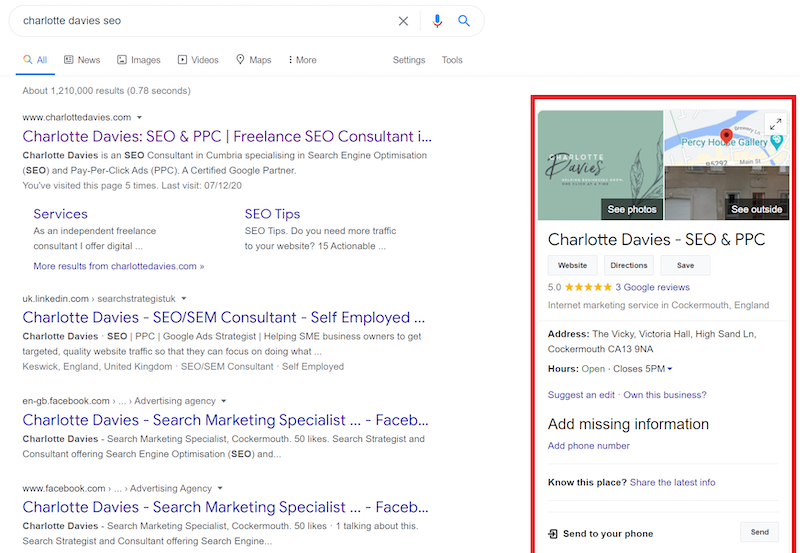
This listing site is a “snapshot” of your business that shows up in search results and maps, and is more prominent and visually appealing than standard search results. It gives users a quick overview of your business, including services or products, contact details, reviews, and directions to a physical location (if relevant).
To make the most of your listing, you can create one for free (or claim one if it already exists), then add as much information as you can about your business: photos, an about section, list of services, booking links, and so on. You can then keep it fresh and relevant by adding regular news and updates, collecting reviews, and checking and updating information.
Learn more about how to set up and optimise a Google Business Manager Profile.
Bing Places for Business
Google isn’t the only place you can find a free business listing. Bing has a similar option that offers comparative benefits on a different search engine. You can set up a listing from scratch, or sync it with your Google Business Manager profile for additional ease.
Find out how to get a Bing Places for Business listing.
Local Directory Listings
Directory listings on sites such as Yell and Yelp can help your business get seen by a larger audience in your local area. Basic listings are free to set up, though you can also opt for a paid subscription if you want to be able to add more information.
As well as these broad-industry directories, there are industry-specific directories to explore. Hitched is an option for wedding suppliers, or TripAdvisor for the hospitality industry. Again, make sure you add your location and/or service areas to your listing.
Finally, look for local listing opportunities in your local area. In Cumbria and the Lake District, for example: Cockermouth has Cockermouth Online, Penrith has Discover Penrith and Kendal has Visit Kendal. Local newspapers also often have online directories where you can list for free.
Listing directories such as these can benefit your local SEO in a number of ways. They strengthen your location profile by repeating your service area across the internet; they help users find you in a larger range of places, and they can boost your trust signals by building a link profile.
Local Backlinks and Mentions
Your backlink profile is the number of external sites linking back to your website. The more unpaid backlinks you can obtain from relevant, reputable sites, the better your SEO performance. Even if there is no direct link, you can even improve your business reputation just by being mentioned across the internet, such as in newspaper articles.
Valuable backlinks can be hard to come by so may require extra work. Some ways you can obtain backlinks include:
- Approaching relevant businesses and writing a guest blog or article for their website. If you do this, avoid exact replicates of your own content and tailor it to their audience.
- Building a positive reputation locally and within your industry so that other businesses will recommend yours.
- Writing interesting and unique content on your own site that others want to quote and link to.
- Recommending related businesses that you endorse and/or work with regularly, and asking them to reciprocate. If you do this, be careful not to overdo it, and be genuine about your recommendations, otherwise you could be penalised or lose trust.
Reviews

Reviews send strong trust signals to search engines and users, and can also include valuable information about your location and service area. Collecting regular positive reviews can boost your SEO both generally and for more local searches.
Take every opportunity to ask for reviews: on emails, after a service has been provided or a product sold, on your socials, on your website… You can also send reminders to encourage customers to leave their feedback.
How you collect those reviews will depend on your strategy. Both Google Business Manager and Bing Places for Business allow you to easily collect reviews. Or you might collect them via an industry site such as TripAdvisor or Hitched. Either way, pick one verified location for all your reviews and direct customers there.
Read more about using reviews to boost your SEO.
Conclusion
Whilst general good SEO practices will help with local SEO too, there are things you can do to specifically improve your performance locally. In the Lake District especially, competition in many industries such as hospitality and weddings is high, so improving your search presence is vital for success. Try these techniques yourself or get in touch if you would like to discuss professional support.