

On-Site AI Chatbots


The addition of an AI chatbot to your e-commerce site opens up all sorts of possibilities. How many opportunities it opens will depend on the chatbot itself, and the amount you’re willing to spend on it. But, used right, they can both save and make you money.
Immediate, 24/7 Customer Support
When a customer is browsing your site and has a question, they usually don’t want to wait several days to get the answer to a question. They also don’t want to traipse through walls of text and pages to (maybe) find the answer to a question. And you don’t have time to answer questions as soon as they come in.
With an AI chatbot, customers can ask anything and get the answer immediately. That way, they’re happier and you’re more likely to make a sale because you’ve caught them at peak enthusiasm. If they’d waited a day or more for an answer, they may have moved on and bought from a competitor instead.
Save Time and Money
You’re probably used to answering the same customer questions over and over again – they can quickly fill an inbox and steal hours from you. Sometimes you might get so sick of answering that you ignore them and your customer never gets a response (and never makes a purchase as a result)
An AI chatbot doesn’t have such issues with repetition. And they can also respond much quicker. By leaving the FAQs and basic client care to them, you can save your own time, save your staff time, and focus more on money-making activities.
A Powerful Search Function
Traditionally, on-site searches can be hit-and-miss. Often, they throw up lots of results that are only vaguely relevant to the search and the user has to shift through to find what they want (or give up and leave the store).
On the other hand, an AI chatbot can act as a much more powerful search. Users can ask much more specific questions to help them find a product that’s just right, and they can even use imagery and video to find similar products. For example:
- Traditional on-site search: gaming computer
- AI-powered search: I want to find a black gaming computer with very good reviews, that isn’t too big or too noisy, and which costs less than £1,500.
- AI-powered search: Here’s a picture of a celebrity wearing a pair of shoes that I like. Do you have anything similar?
The AI chatbot aids the user’s research, saves them time, and ultimately encourages them towards a purchase.
Keyword and Topic Research
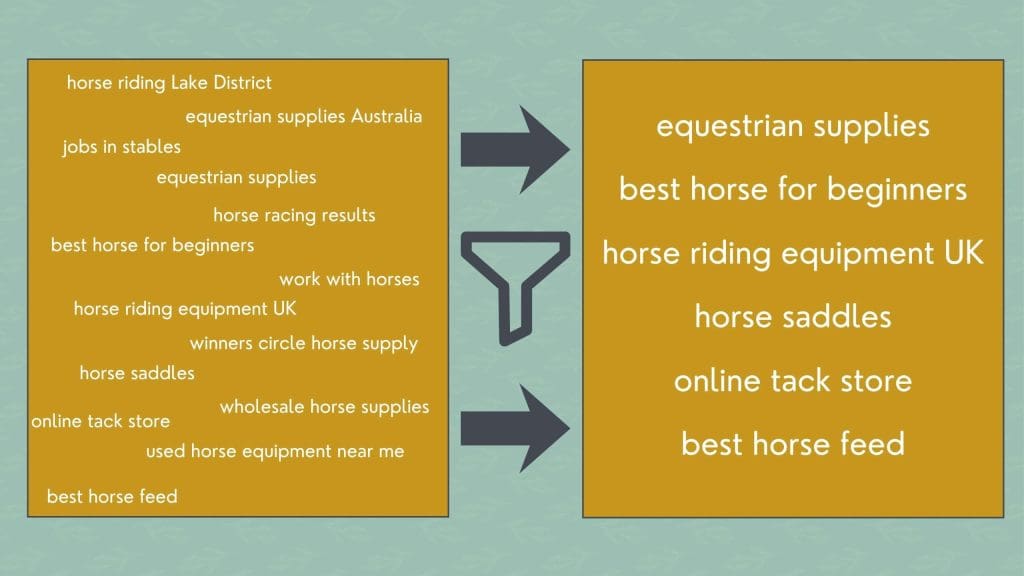
Understanding customer needs will help you create content that appeals and encourages sales. But keyword and topic research can be time-consuming, and it can be confusing if you’re not used to it. Instead, AI can help save time, highlight trends, group similar searches, and suggest page structures based on the information available.
I go into more detail on how AI can help e-commerce businesses with this research in a separate guide: How to use AI for keyword and topic research.
Data Analysis and Strategy
Collecting and understanding data from your e-commerce store is vital for business growth and success. It can help you to make business decisions, assess stock performance, build a strategy, and find out where your store is losing and making money.
But many store owners ignore it because they’re worried about the time-commitment and overwhelm of data analysis. Fortunately, AI has a cure for that too, as you can see from this client case study on how I used AI to de-risk seasonal buying for a fashion boutique.
The key to using AI for data analysis is to understand what you want from it and ask for an output that’s going to give you clear, actionable insights. Alongside the raw data, use clear, well-defined prompts to explain exactly what you want. The more precise you can be, the more successful your analysis.
As always, make sure you assess the results yourself before you make big decisions based on it. Remember: human insight is still necessary.
Personal Online Experiences

As the functionality becomes more sophisticated, online shoppers are expecting more personalised services. AI can help by curating collections based on the information it knows about a user and conversations it has. It’s basically an online personal shopper.
The advantage of this is that you can provide a higher-quality service without the same costs of a bricks-and-mortar store and hiring more people. It also eases the shopping experience for the user, meaning they’re more likely to make a purchase.
Hyper-personalisation is becoming more and more normal and AI can help your store provide a real 1:1 service.
Targeted Email Campaigns
Many e-commerce stores lose their customers and potential customers as soon as they navigate away from the site. But getting them there the first time is the hard part, so putting more effort into nurturing them is time and money well spent.
Abandoned checkouts are one of the key drop-off points in e-commerce sources. A shopper has a full basket, has started the checkout process, and has then been pulled (or pushed) away. An AI-powered email campaign can help draw them back by sending reminders, recommending alternative products (e.g. cheaper options), or creating personalised special offers.
Personalised and targeted email campaigns can also be used for existing and past customers: sent when there’s an offer on a previously viewed product, creating curated product recommendations, or sending reminders when they’re likely to be running low on a consumable.
Analyse Product and Shop Pages
SEO success comes from understanding what your users are looking for and giving them the information they need to help them make a purchase. AI can help by analysing pages of your e-commerce site and seeing how they measure up to search queries and competitors.
For example, share your product page content with an AI bot and ask things like:
- What useful information is the page missing that shoppers would find useful?
- How would you rate this page compared to similar products on a competitor’s store?
- Does this page address all the possible pain-points of a potential customer?
You can do something similar with category pages by asking AI to analyse current pages and make suggestions for additional categories and sub-categories that would be most useful to shoppers.
Trend Spotting and Alerts
Keep on top of industry trends and news with AI alerts. These can help you understand what’s popular in your industry now and how customer behaviour is changing. Well-prompted alerts can also help you jump on new trends and respond quickly to peaking interest. For example, an alert about increased searches around a specific drink flavour, or a celebrity promotion, means you can quickly highlight any relevant products on your site so that they’re easier to find.
Pricing Optimisation

Adjust your pricing in real-time based on product popularity, available stock, and market trends. With AI, you can take the guesswork (and the time-consuming edits) out of your pricing optimisation, letting it respond immediately with price increases and discounts as the market demands. By analysing data across the web, as well as on-site user behaviour and general trends, AI can handle your pricing strategy with minimal input from you.
Conclusion
The opportunities for AI in ecommerce are expansive, saving time and money and increasing profit. From saving admin times, providing a higher-end and smoother customer experience, and responding more quickly to a rapidly changing market, AI can move your e-commerce up to the next level. Make sure you budget for the right tools, and ensure you keep an eye on AI behaviours. Used well, AI will be a boost to business.